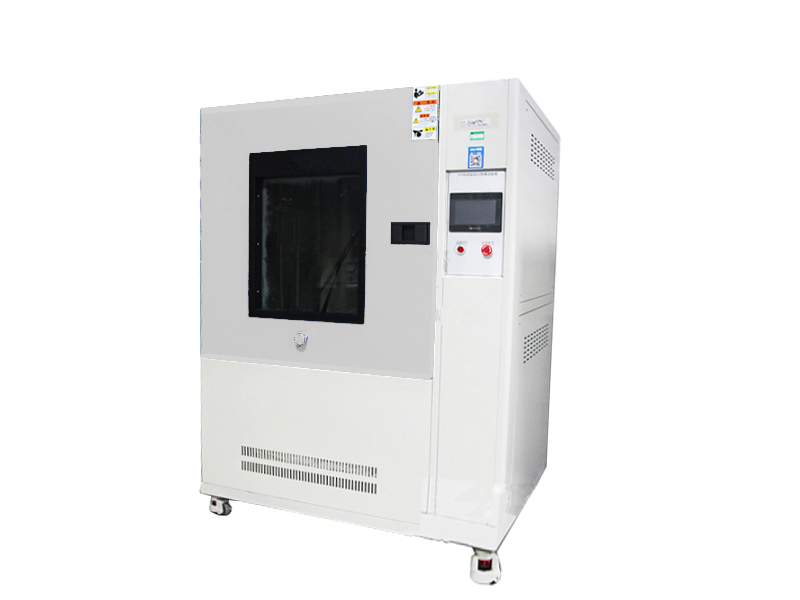

IPX7 Immersion tank

IPX7 Immersion Tank China Manufacturer and Supplier

IPX7 Water Immersion Test Equipment is an immersion tank filled with water to allow the specimen to be submerged in its service position at a specified depth, such that the specimen enclosure’s highest point is at least 0.15 m below the water surface and its lowest point is at least 1 m below the water surface.

For specimens with a height less than 850 mm, the lowest point of the specimen enclosure is required to be 1000 mm below the water surface; for specimens with a height equal to or greater than 850 mm, the highest point of the specimen enclosure is required to be 150 mm below the water surface.

After temporary immersion for half an hour, the test result is determined by confirming whether water penetration in a quantity that causes harmful effects or impairs performance has occurred.

AmadeTech can provide different types of immersion tanks for performing the IPX 7 temporary immersion test.

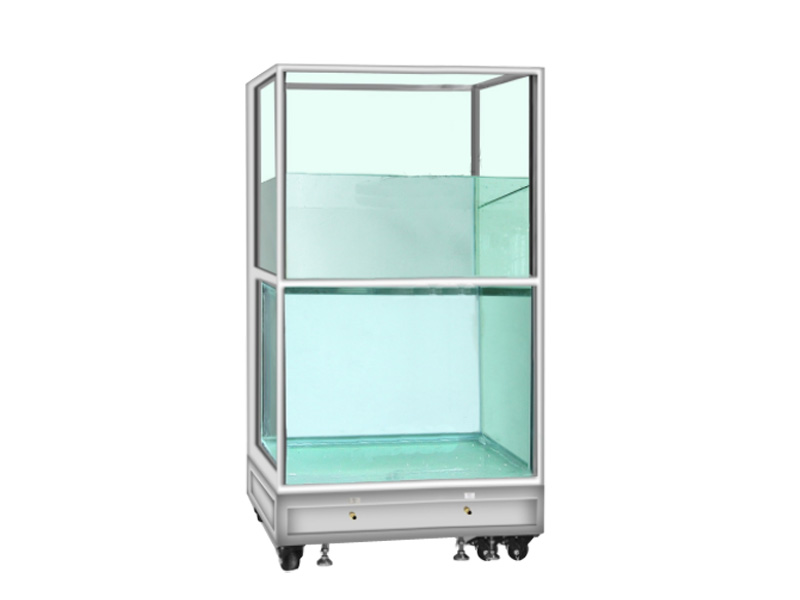
Tempered Glass Vertical Immersion Tank

The transparent, cube-shaped water tank is constructed from 12 mm thick tempered glass with strong pressure resistance and 304 stainless steel. Tank size can be customized to your sample specifications. When the water inlet valve is opened, water enters the tank; its maximum depth can reach 1200 mm, meeting the testing needs of most samples. Water can be drained through the water outlet valve when opened.

Acrylic Cylindrical Immersion Tank

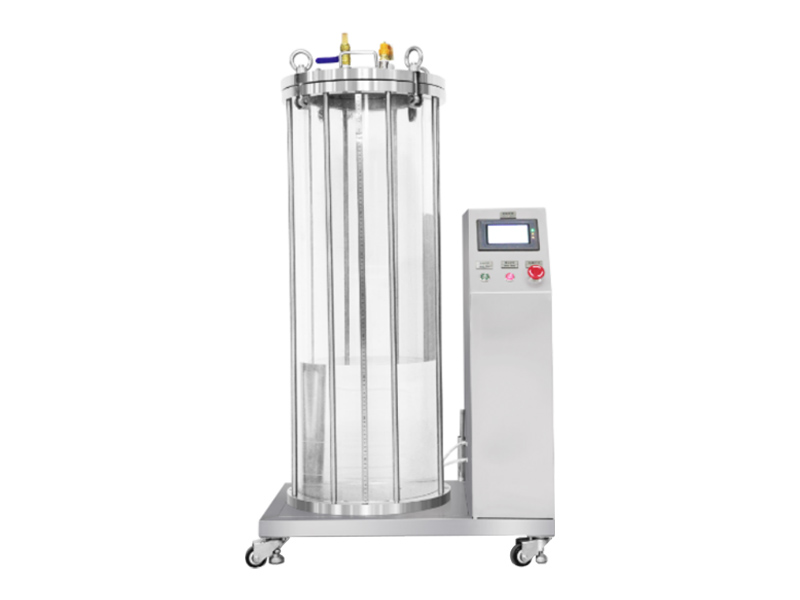
The most popular transparent model is the cylindrical water tank made of acrylic (organic glass), shown on the right. It features a slim body, allowing the test operator to clearly observe the sample and any bubbles if a leak occurs during immersion. We can customize an appropriate cylinder diameter and height based on sample size.

The clear cylinder on all sides provides an unobstructed view for observing the water surface. With the help of a vertical stainless-steel ruler with 1 mm accuracy mounted on the water tank, you can easily measure water depth and adjust the sample’s immersion by controlling water inlet and outlet. The bottom of the water tank is fitted with casters and adjustable feet for easy movement and secure positioning.
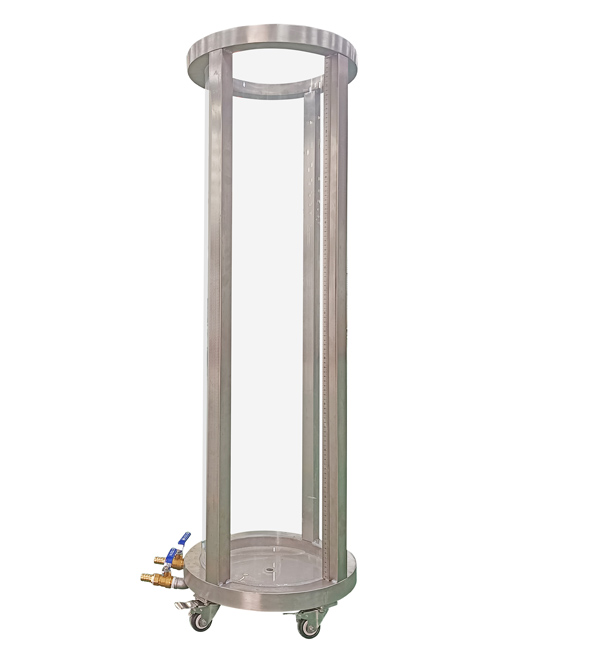
Cylindrical transparent IPX7 immersion tank

Cylindrical transparent immersion tank

Contact Form Demo (#3)

Stainless Steel Vertical Immersion Tank

The commonly used nontransparent IPX7 water tank is the one shown in the right picture. Its walls are double-layer 304 stainless steel plates to ensure robustness and resistance to rust and corrosion, combined with seamless welding technology to prevent water leakage during testing.

A rectangular tempered glass panel extending from bottom to top on the front of the device allows users to view the interior during tests. In addition, a stainless-steel ruler running parallel to the glass enables accurate observation and determination of water level and sample immersion depth. A metal hook is attached to the top corner of the inner tank for fastening the sample with a string.
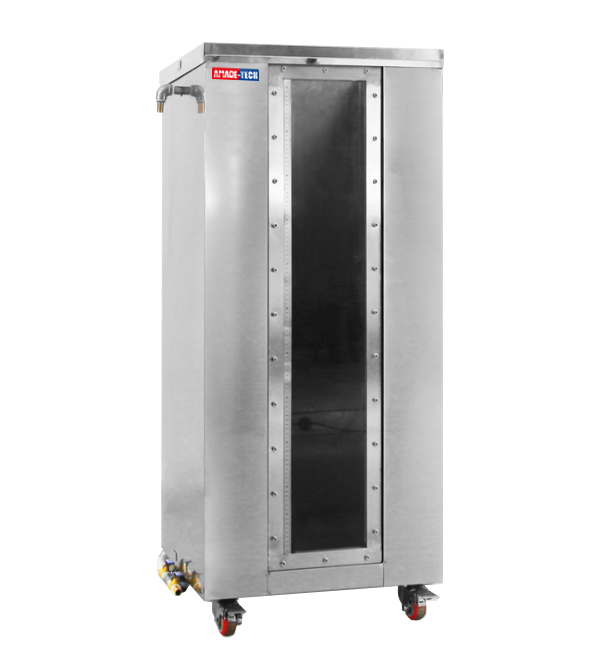
Stainless steel IPX7 immersion test tank

Stainless steel IPX7 immersion test tank

Stainless Steel Immersion Tank with Electric Lifting Function

If you want to add more automated elements to IPX7 testing, AmadeTech can accommodate you. To allow users to lower and raise the sample conveniently and effortlessly during testing, we can equip the immersion tank with support arms and a top crossbeam. An electric hoist attached to the crossbeam connects via wire rope to a wire-gauze sample-holding container. The container has a door so you can place the test specimen inside before testing. Lifting and lowering the sample inside the container is controlled by a separate remote. When the sample is submerged, watch the ruler on the outside of the tank and the sample position while pressing and holding the remote’s “UP” or “DOWN” button until it reaches the desired test depth. The water tank size and overall device height can be customized to your requirements.
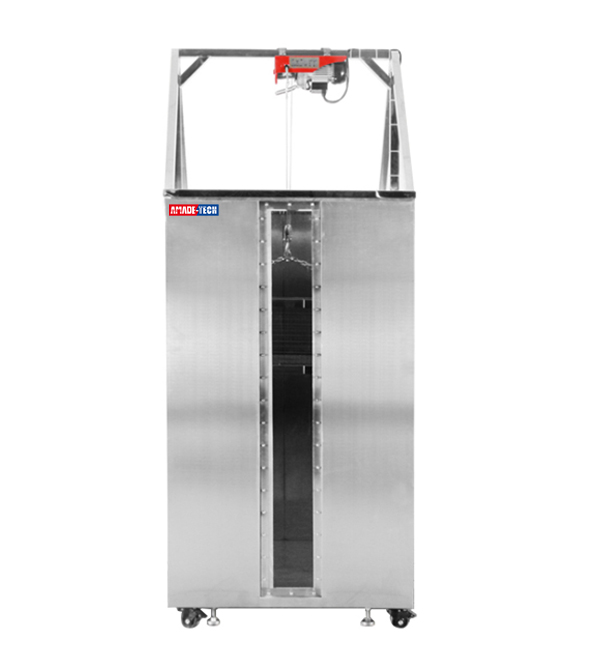
IPX7 immersion test tank with an electric hoist

IPX7 immersion test tank with electric hoist

In addition, AmadeTech supplies a water tank that integrates IPX7 and IPX8 testing functions, a dedicated IPX8 immersion tank, and other IP Testing Apparatuses. Please contact us for more details if you are interested.
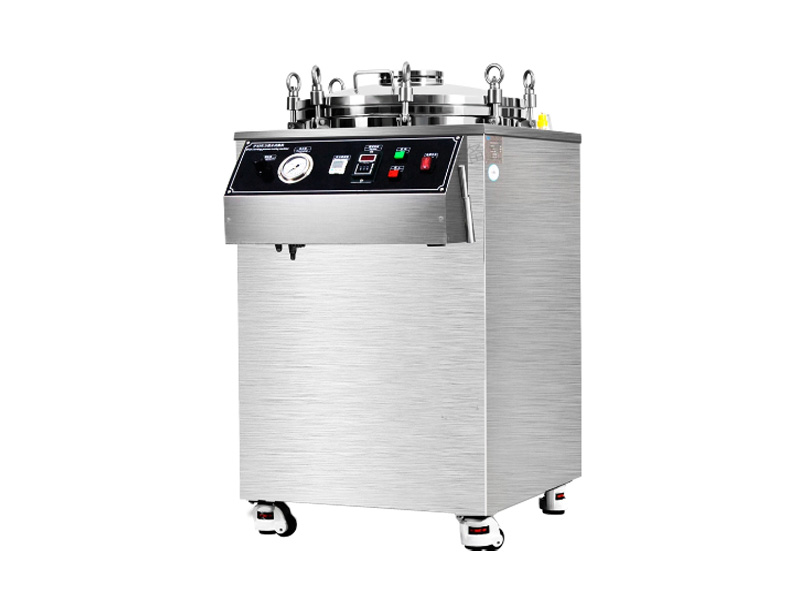
IPX7&IPX8 combined immersion tank

IPX7&IPX8 combined immersion tank

Test Standards

  • IEC 60529
  • ISO 20653
  • DIN 40050-9, etc.

Technical Parameters

Model

AT-1005D-300

AT-1005D-600

AT-1005D-800

AT-1005D-X

Interior dimensions

(W) 300 x (D) 300 x (H) 1200 mm

    (W) 600 x (D) 600 x (H) 1200 mm

    (W) 800 x (D) 800 x (H) 1200 mm

    Customized upon request

    Overall dimensions

    (W) 450 x (D) 350 x (H) 1300 mm

    (W) 750 x (D) 700 x (H) 1300 mm

    (W) 860 x (D) 860 x (H) 2500 mm

    Materials

    1.5 mm thick 304 stainless steel + 8 mm thick tempered glass 

    Measuring range of water level ruler

    0 ~ 1100 mm

    Water level control method

    By manual (comes with an inlet valve and drain valve)

    Optional

    Equipped with an electric hoist and stainless steel basket for samples placement and lifting

    IPX7 Immersion Test Tank Features

    • Durable & Transparent Construction: Fabricated from high-grade 304 stainless steel combined with reinforced tempered glass or acrylic windows, allowing for clear, unobstructed observation of the sample during immersion.
    • Versatile Geometric Options: Available in multiple tank shapes (cylindrical, rectangular, or custom geometries) to suit various laboratory layouts and testing preferences.
    • Fully Customizable Dimensions: We offer tailor-made tank sizes engineered to meet your specific sample volume and capacity requirements.
    • Precision Depth Control: Features a highly flexible immersion depth adjustment system, ensuring exact compliance with the depth requirements of IPX7 standards.
    • Motorized Sample Handling: For increased efficiency, an electric lifting device can be integrated to facilitate the handling of heavy or bulky samples.
    • Advanced Remote Operation: The premium configuration supports remote-controlled vertical positioning, allowing operators to raise or lower samples safely and precisely from a distance.
    • Streamlined Water Management: Designed for rapid operation with high-flow inlets and outlets, ensuring that filling and draining the tank is both fast and effortless.
    • Portable Laboratory Design: Equipped with heavy-duty movable casters, providing maximum mobility and convenient repositioning within your testing facility.
    • Superior Value & Low Maintenance: Engineered for a high price-to-performance ratio, the simplified structural design minimizes maintenance needs while maximizing equipment lifespan.

    FAQs

    According to testing standards such as IEC 60529, ISO 20653, and DIN 40050-9, IPX7 is a very high level of waterproofing. If a finished product or component passes the IPX7 waterproof rating test, it means that under normal operating or service conditions, after being submerged in one meter of water for 30 minutes continuously, no water will penetrate the interior, and the product or component will function normally. (This is provided that the total height of the sample does not exceed 0.85 meters. If it is greater than or equal to 0.85 meters, the highest point of the sample must be at least 0.15 meters below the horizontal plane during the test.)

    The definition of IPX7 rating testing in IEC 60529 is as below: Ingress of water in quantities causing harmful effects shall not be possible when the enclosure is temporarily immersed in water under standardized conditions of pressure and time.

    The testing duration is uniformly set at 30 minutes.

    The accurate immersion depth depends on the total height of the sample at the testing position. If the total height of the sample does not exceed 850mm, the bottom of the sample casing must be positioned 1000 mm below the surface of the water. If the total height of the sample is greater than or equal to 850 mm, the top of the sample casing must be positioned 150mm below the surface of the water.

    IPX7 and IPX8 tests are similar because both require the sample to be completely submerged in water to test its waterproof performance. However, their test conditions, stringency, and equipment differ.

    IPX7 typically requires a test depth of one meter (except for samples with a height of 0.85 meters or more). IPX8 requires a deeper test depth, with the specific depth determined by the manufacturer or stakeholders based on actual needs, typically ranging from 10 to 50 meters.

    IPX7 requires a fixed test time of 30 minutes. IPX8, however, does not specify a time limit, allowing manufacturers to define a longer test time than 30 minutes. This time varies between products and manufacturers.

    Since IPX7 tests are relatively shallow, a container greater than 1 meter in height can be filled with water, and the sample can be directly submerged to complete the test. However, IPX8 tests are typically tens of meters deep. In a real laboratory, it’s impossible to find such a tall container to fully reproduce the test scenario. Therefore, a container with a pressurization device is needed to simulate water pressure. First, a certain amount of water is poured into the container, and then the sample is immersed in the water. During the test, the space above the water surface in the container is pressurized to apply pressure to the water, simulating the pressure the sample experiences at a specified water depth. The test is completed after the specified time has elapsed.

    In summary, the test conditions for IPX8 are more stringent than those for IPX7, and IPX8 provides a higher level of protection for products than IPX7.

    1. Fill the testing equipment container with purified water.
    2. Place the sample to be tested into the water in the container, ensuring it sinks to the bottom in its working position. If the sample’s density is less than water, or if it contains air, add a weight attached to the sample to ensure it sinks. For easy and quick sample removal, it is recommended to tie a thin string to the sample, with the free end protruding above the water surface for easy gripping and quick pull-out if needed. (If the sample requires power or operation during testing, connect electrical cordsto power the equipment.)
    3. Use the observation window and scale on the testing container to check if the water level meets the standard requirements. Except for a very few samples with a height of 850 mm or more, most samples require the bottom of the sample to be 1000 mm below the water surface. If the level is too high, drain the water; conversely, if the level is too low, add water.
    4. Start timing with a stopwatch. After 30 minutes, remove the sample from the container check for water ingress and whether it can function normally.

    The standard does not have a strict temperature requirement for IPX7 testing; you can conduct the test at room temperature. However, the temperature difference between the water and the sample equipment must not exceed 5 K. If the test is conducted while the equipment is powered on or its components are operating, the relevant product standard may specify a modified requirement.

    It depends on the function of your sample and the testing requirements. If the sample has lighting or operational characteristics in the service environment, when performing an IPX7 test, you need to turn on the power before immersing the sample in water, or power the sample and activate the corresponding functions. If the sample does not involve electrically driven operating devices, this step can be skipped.

    When you’re planning to purchase an IPX7 testing device, choosing the right equipment is crucial. This will help you complete your testing tasks, improve operational convenience, and save on procurement costs. Before making your purchasing decision, we recommend considering the following four points:

    1. Water Tank Height: This depends on the total height of your sample. If your sample’s total height is less than or equal to 850 mm, a water tank height of 1 to 1.2 meters is sufficient; a higher tank is unnecessary. If your sample’s total height is greater than 850 mm, the water tank height needs to be customized to meet the testing requirements. Of course, in addition to height, the tank’s lateral dimensions must also match the sample’s dimensions.
    2. Water Tank Material: AmadeTech offers two main water tank materials: One is acrylic resin glass. The advantage of this material is that the transparent glass allows the operator to clearly observe the sample’s condition during testing, such as whether bubbles are emerging from the sample. The disadvantage is that the equipment’s outer shell is slightly less impact-resistant. The other material is 304 stainless steel. The advantage of this material is its strong resistance to pressure and impact, allowing for the manufacture of large-scale equipment. The disadvantage is that it makes it inconvenient for operators to observe the test status of the sample.
    3. Water Tank Shape: Most IPX7 testing equipment is a vertical cuboid, capable of testing multiple samples simultaneously or accommodating larger samples in a single test. To facilitate operator observation of the test equipment in water, cylindrical water tanks made of resin glass are becoming increasingly popular.
    4. Ease of Operation: For lightweight samples, manual placement and removal from the tank are possible. However, manually handling heavy samples is strenuous and increases the risk of accidents. AmadeTech offers a solution: an electric hoist is installed over thetop of the tank, and a sample holding cage is suspended belowby a wirerope. With a manual remote control, the sample cage can easily and automatically rise and fall, significantly reducing the operator’s workload and improving safety during testing.

    Each of our IPX7 waterproof devices has an inlet with a valve and an outlet with a valve. During the testing setup phase, you only need to connect a tap water hose to the inlet and a drain hose to the outlet. After opening the inlet valve, water will automatically flow into the tank to fill it. When you need to lower the tank water level or empty it, simply open the outlet valve. This eliminates the need to manually add or scoop water from the top of the tank.

    IPX7 testing equipment has a simple structure and does not involve complex maintenance. For ordinary water tanks, you only need to keep the equipment clean, drain the water after each test, and place it in a well-ventilated and dry environment. External impacts to the equipment casing are strictly prohibited. For IPX7 equipment with an electric lifting device, in addition to the above points, you also need to ensure that the motor does not come into contact with water during use, and the lifting motor should be run regularly, for example, once every two weeks if it is not used for a long period.

    Request a Quote Now

    Please feel free to contact us for more details on the product, price, lead time, payment terms, shipment methods, etc. Amade Tech sales engineers will respond within one working day.
    Contact Form Demo (#3)