
Lab Platen Vulcanizing Press Manufacturer
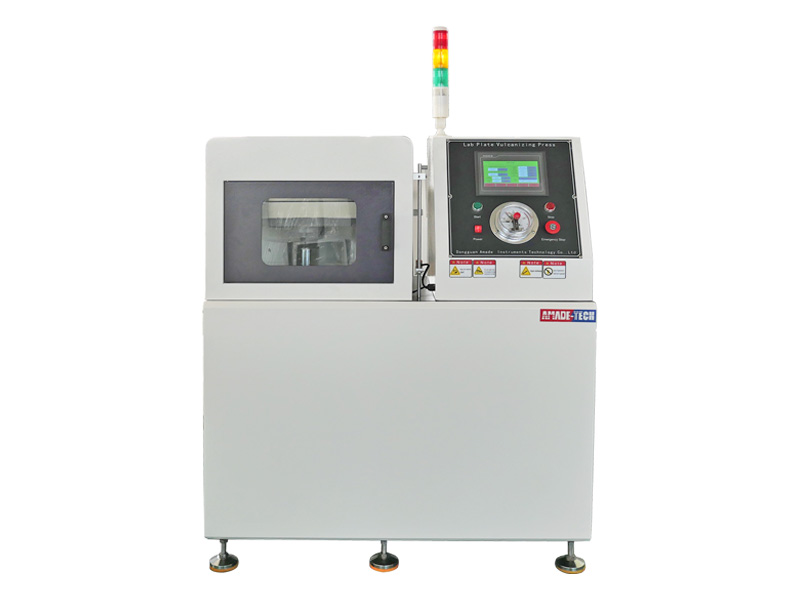
A laboratory hydraulic press – also known as a lab-scale compression molding machine – is used to process small quantities of rubber, plastic, or other polymeric materials under high temperature and high pressure. It enables the creation of samples for research into formulation compatibility and material preparation, providing both the physical specimens and the data necessary for formulation development, raw material inspection, and process optimization.
When used for rubber vulcanization, the machine subjects compounded rubber to specific temperature, pressure, and duration parameters, triggering a cross-linking reaction that transforms the material from a plastic state into an elastic state. With the aid of molds of defined dimensions, it produces standardized test specimens—such as the dumbbell-shaped pieces used for tensile testing. Additionally, the press can be used to heat and compress plastic pellets into sheets of a specific thickness, which are then utilized for comparing color and light transmission properties.
Rugged Pressing Platens
This hydraulic press features two 300mm x 300mm steel platens that are both heat-resistant and wear-resistant. With a hardness of 50~60 HRC and a surface-quenched finish, the platens remain undeformed even after long-term use and offer excellent thermal conductivity. Each platen contains integrated heating elements and temperature-sensing components. The platen surfaces can be heated from ambient temperature up to 300°C; built-in high-precision temperature sensors monitor the temperature in real time, while a temperature control board and a PLC (Programmable Logic Controller) ensure precise display and regulation of the processing temperature.
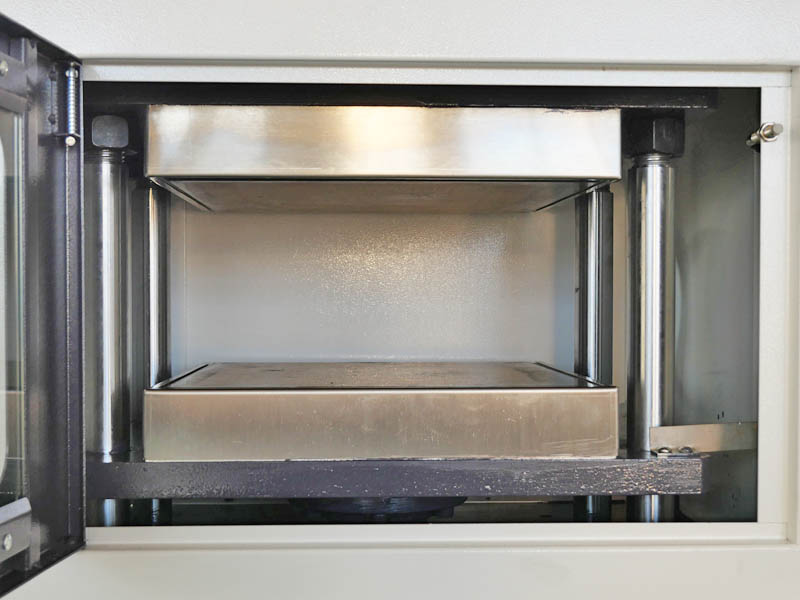
Platens
The upper platen is fixed, while the lower platen can be moved vertically under controlled operation. Material is placed onto the lower platen; during operation, the lower platen rises to make contact with the upper platen, applying a force of up to 30 tons. Both the applied pressure and the dwell time (holding duration) can be configured as needed. The working area for the two platens is enclosed and equipped with safety doors and an interlocking mechanism—the machine will not operate unless the doors are closed.
If you are looking for a multi-layer laboratory vulcanizing press with water-cooling capabilities, please click “HERE“
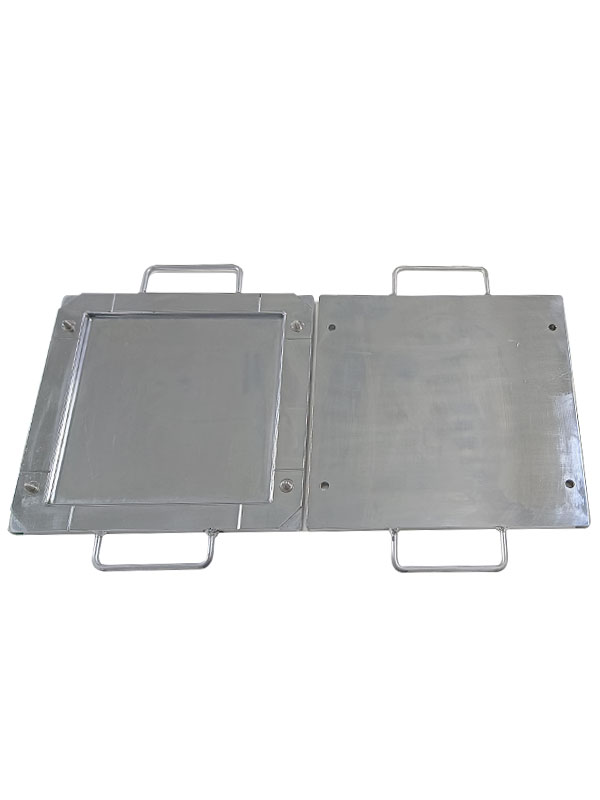
Single-cavity mold
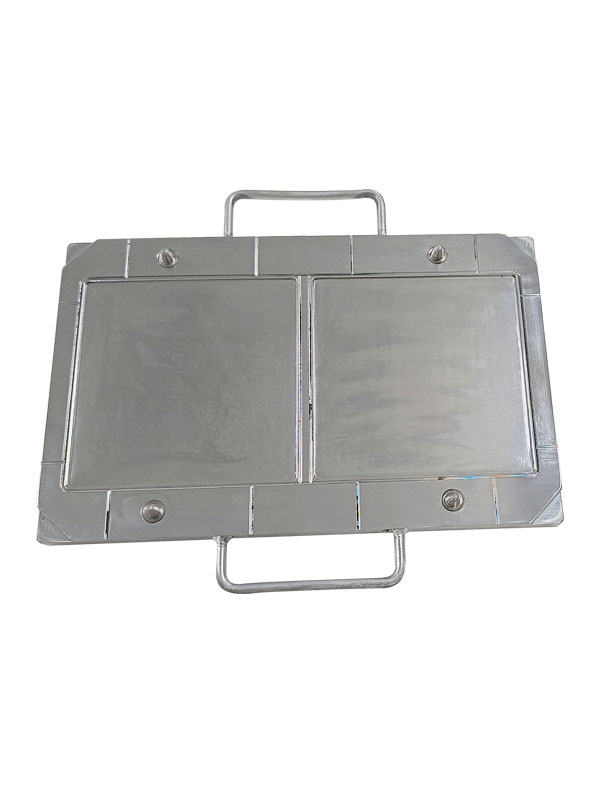
Dual-cavity mold
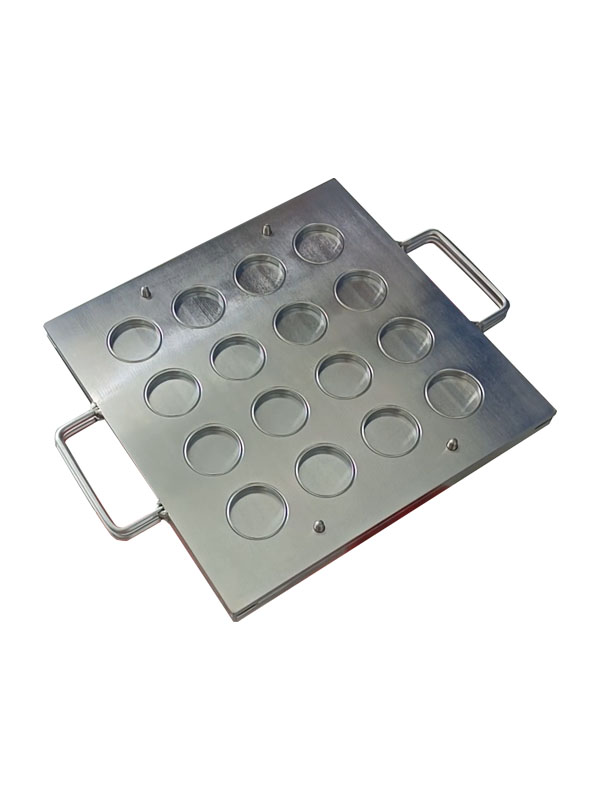
Disk-cavity mold
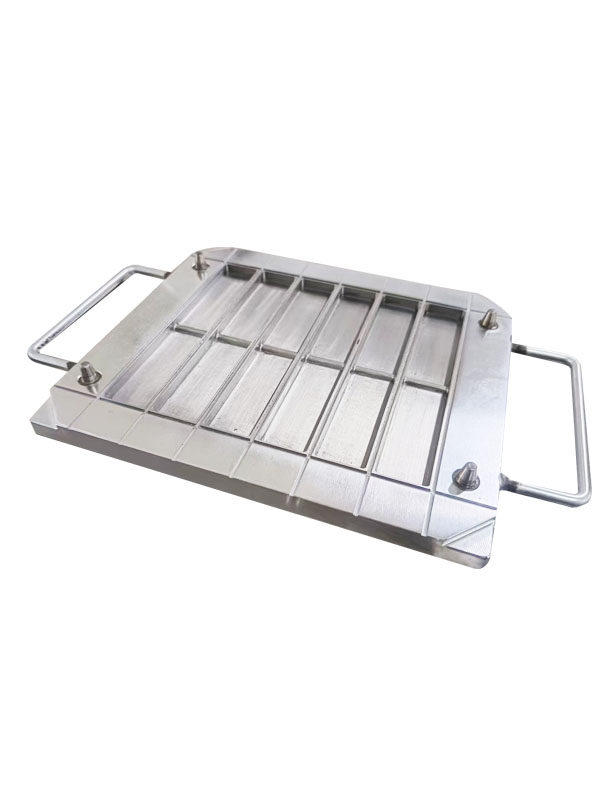
Rectangular-cavity mold
To accommodate the preparation and testing of rubber specimens, the machine can be configured with various types of molds. Each mold set consists of two plates containing recessed cavities of specific shapes and dimensions—designed in accordance with relevant standards—for molding materials into test specimens. Examples include dumbbell-shaped specimens for tensile testing, rectangular specimens for De Mattia flex-cracking tests, and circular specimens for compression set testing.
Intuitive Control Panel
The human-machine interface for this platen vulcanizing press consists of a PLC-supported touchscreen, which features various command buttons and displays real-time data. Operators can pre-set parameters such as platen temperature, preheating duration, and pressure-holding time. The control panel is also equipped with physical buttons and a pressure gauge for device control and pressure adjustment. Notably, the machine includes an automatic degassing function: before the final pressing stage, the lower platen applies light, repetitive pressure to the material, effectively expelling trapped air to ensure the quality and performance of the finished product.
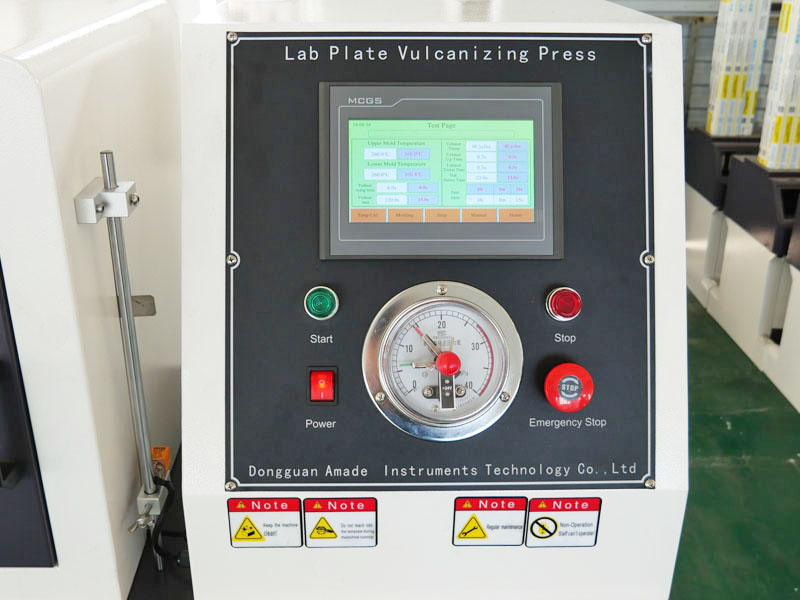
Control panel
Automatic Hydraulic System
The equipment utilizes a closed-loop hydraulic flow control system; a high-performance pump works in tandem with high-precision, low-friction hydraulic cylinders to achieve constant-speed operation, supported by an automatic pressure compensation feature. It provides robust load capacity and smooth vertical movement, with automatic pressure replenishment during the pressing cycle. Once started, the machine automatically executes the pre-pressing, pressurization, pressure-holding, and pressure-release sequences according to the pre-set parameters. In addition to the automatic mode, the machine also supports a manual mode for controlling the movement and operation of the platens.
Technical Parameters
| Model | AT-R7026C-30T |
| Pressure capacity | 30T |
| Platen area | 300mm x 300mm |
| Platen hardness | 50~60HRC |
| Platen evenness | ≤ 0.03 mm |
| Platen parallelism | ≤ 0.16 mm |
| Heating method | Electrical heating |
| Temperature range | RT ~ 300°C |
| Temp. uniformity | ±2°C |
| Heating time | 15 min. From RT to 160°C |
| Cooling method | Natural cooling |
| Piston stroke | Max. 150 mm |
| Cylinder speed | 11mm/s |
| Power supply | 3∮,AC380V or supplied |
Lab Hydraulic Press Features
- The dimensions of the machine’s platens can be customized.
- The temperatures of the two platens can be controlled independently.
- Various types of molding platens are available for producing specimens of different shapes and sizes.
- The platen operating area is enclosed to prevent personal injury.
- A safety interlock system is provided; the machine will not operate unless the safety door is closed.
- The operating pressure of the platens is adjustable.
- The machine features a pre-pressing/venting function, with adjustable venting pressure and frequency.
- Equipped with a touch screen.
- The operating system supports both Chinese and English.
- Supports both automatic and manual operating modes.
- Simple to use and easy to maintain.
Request a Quote Now
Please feel free to contact us for more details on the product, price, lead time, payment terms, shipment methods, etc. AmadeTech sales engineers will respond within one working day.