

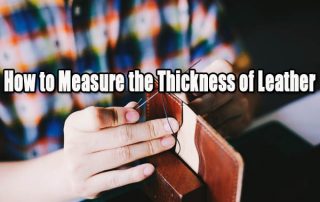
How to Measure the Thickness of Leather with Leather Thickness Tester
Different types of leather have different requirements for thickness. For example, the thickness of general cowhide leather for vamp is 1.2mm-1.5mm, and sheepskin leather for upper is 0.6mm-0.9mm. Determining the leather thickness is also an indispensable step before making determinations of leather tensile strength, leather [...]
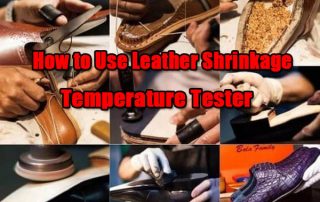
How to Use Leather Shrinkage Temperature Tester to Conduct Shrinkage Temperature Measurement
Leather test piece is placed into water to heat up slowly, which begins shrinking suddenly when the water temperature reaches a certain value. The temperature at this critical point is called as Leather Shrinkage Temperature. After shrinkage, the physical(mechanical) properties of leather will have some [...]
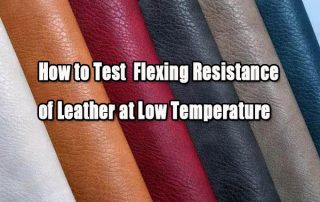
How to Test Flexing Resistance of Leathers at Low Temperature
We have already introduced the Determination of Flexing Resistance of Leathers conditioning temperature of (20±2)℃ and relative humidity of (65±2)℃ in last article, but although some leathers or coatings are able to pass the flexing test at ambient temperature, they can’t adapt to low temperature. [...]
How to Use Bally Flexometer to Perform Leather Flex Test Based on ISO 5402
What's the Leather Flex Resistance Leather Flex Resistance is the flex cycles the leather can withstand until discoloring, fuzzing, cracking, decoating, breakage etc. occur. Instrument - Bally Flexometer The most common instrument used to determine the [...]